
Numbers, Put in Context.
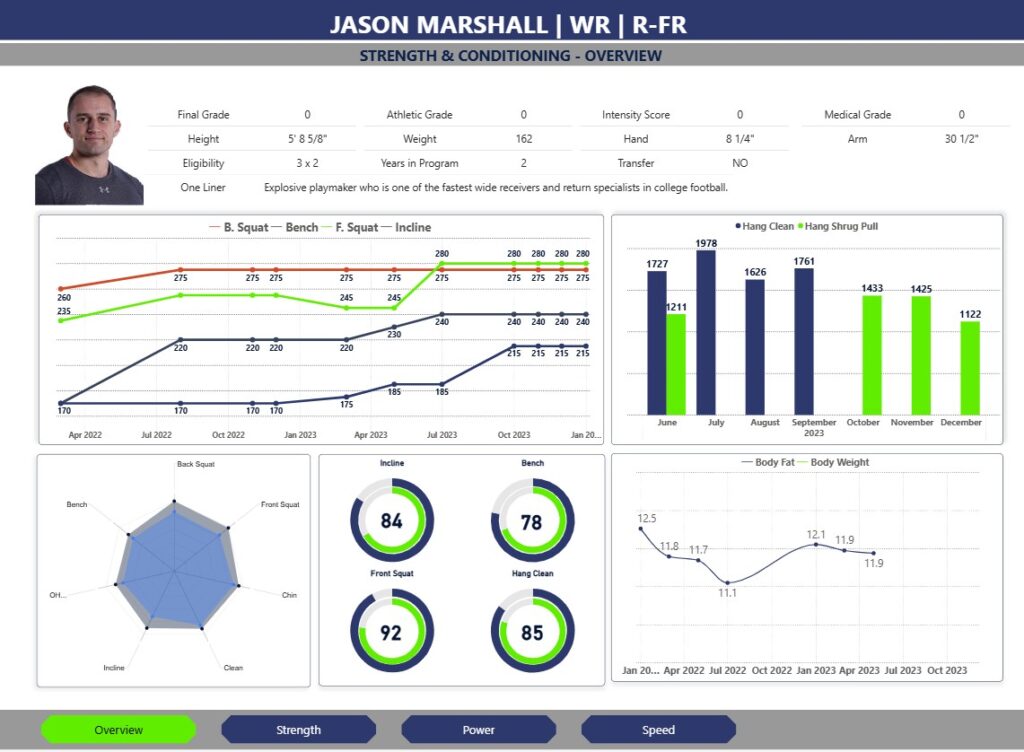
A comprehensive strength and conditioning profile that shows not just raw metrics, but the calculations that give them meaning—both in the short term and over time.
Strength data is easy to collect and hard to interpret. Maxes, velocities, volumes, readiness scores—on their own, they don’t tell a story. Without context, staff are left reacting to numbers instead of understanding what those numbers actually indicate about adaptation, fatigue, and progress.
The Strength & Conditioning Profile solves that problem.
This product combines key performance numbers with calculated context—showing where an athlete stands today, how they’re trending recently, and how that compares to their longer-term baseline. Instead of isolated data points, coaches see performance within a meaningful framework.
Features & Advantages
| Feature | Advantages |
|---|---|
| Integrated strength metrics | View key lifting and performance data in one place |
| Short-term calculations | Understand acute changes and readiness day to day |
| Long-term trend analysis | Track adaptation and progress over weeks and months |
| Contextualized performance views | See what numbers mean, not just what they are |
| Athlete-specific baselines | Evaluate performance relative to individual norms |
| Clean, coach-ready layout | Spend time coaching, not interpreting spreadsheets |
| Device-ready access | Review profiles anywhere, anytime |
Why It Matters
Good training decisions require context.
Instead of chasing fluctuations or overreacting to single sessions, staff can see how today fits into the bigger picture. Short-term calculations help manage readiness and fatigue, while long-term trends guide programming and development.
This shifts conversations from “what happened?” to “is this working?”
Built for Daily Coaching and Long-Term Planning
The Strength & Conditioning Profile supports both ends of the spectrum—daily adjustments and seasonal planning. It provides a shared, consistent view that aligns coaches, sports science, and leadership around the same interpretation of performance.
One athlete.
Clear context.
Better decisions.