
Analyze Patterns, Not Just Problems.
A program-wide issue tracking system that captures issues once and transforms them into daily awareness, long-term analysis, and clear communication—without spreadsheets, manual compilation, or lost context.
Most programs don’t lack issue data. They lack structure.
Issues are logged in Google Sheets, Excel files, notes, or emails. Over time, data becomes fragmented, historical context disappears, and staff spend more time compiling information than actually responding to it.
The Issue Tracking System fixes that by creating one structured intake point and systematically powering every report, view, and analysis downstream.
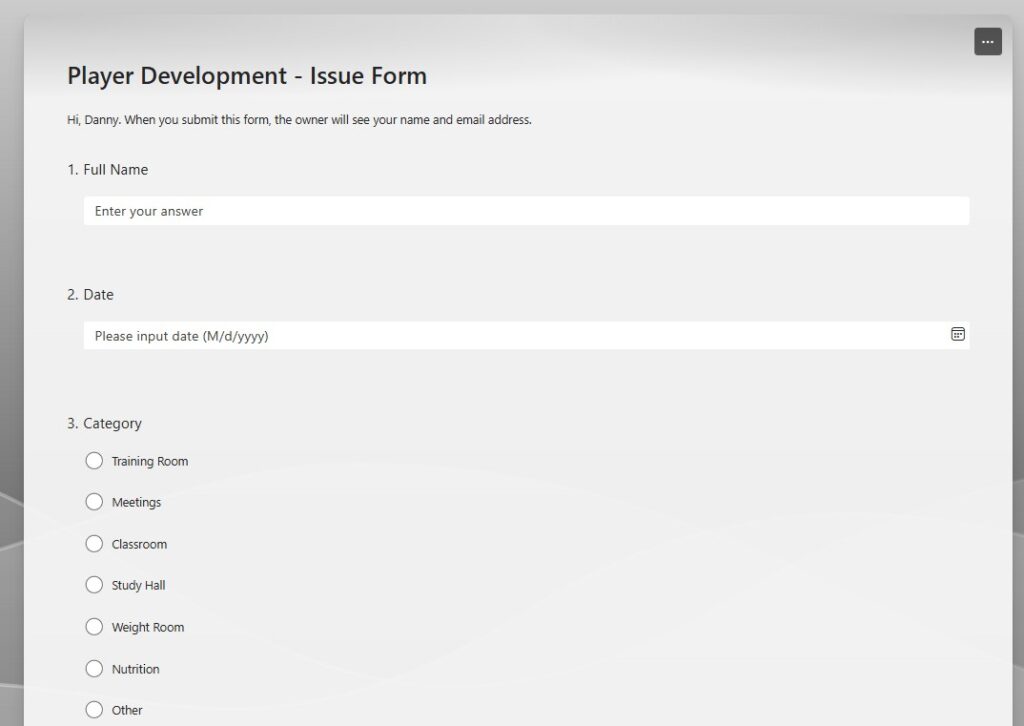
Issue Entry — Built for Real Life
Everything starts with a simple issue tracking form designed for speed and consistency.
Staff can log an issue by entering:
- The athlete
- The date
- The department or event (training room, treatment, meeting, etc.)
- The issue itself
The form works seamlessly on phones, tablets, and desktops, allowing issues to be entered wherever staff are—on the field, in the training room, or on the road.
Once submitted, the system updates automatically. There is no second step, no re-entry, and no dependency on a single person managing files.
This single input powers the entire system.
Daily and Weekly Reporting — Immediate Awareness
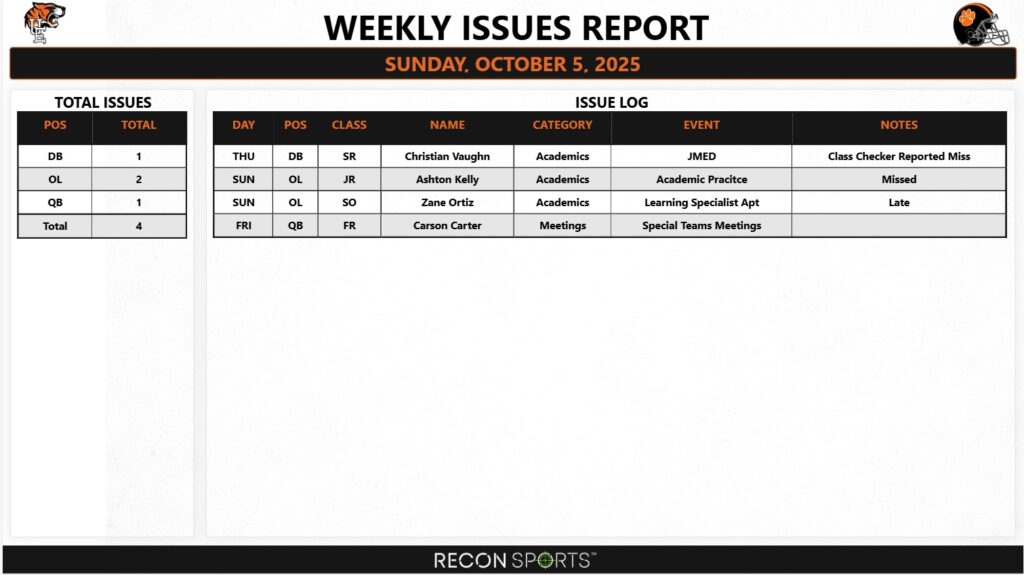
As issues are logged, they immediately populate daily issue reports. These views give staff a clear picture of what is happening right now without waiting for end-of-day or end-of-week summaries.
From there, the system rolls seamlessly into weekly reports, allowing staff to:
- View totals by player
- Break issues down by position group
- Share filtered reports with specific coaches
Reports can be exported to PDF in seconds, making it easy to communicate with the head coach, coordinators, or position coaches without rebuilding anything.
Semester and Seasonal Totals — Long-Term Context
Where most systems fall apart is over time.
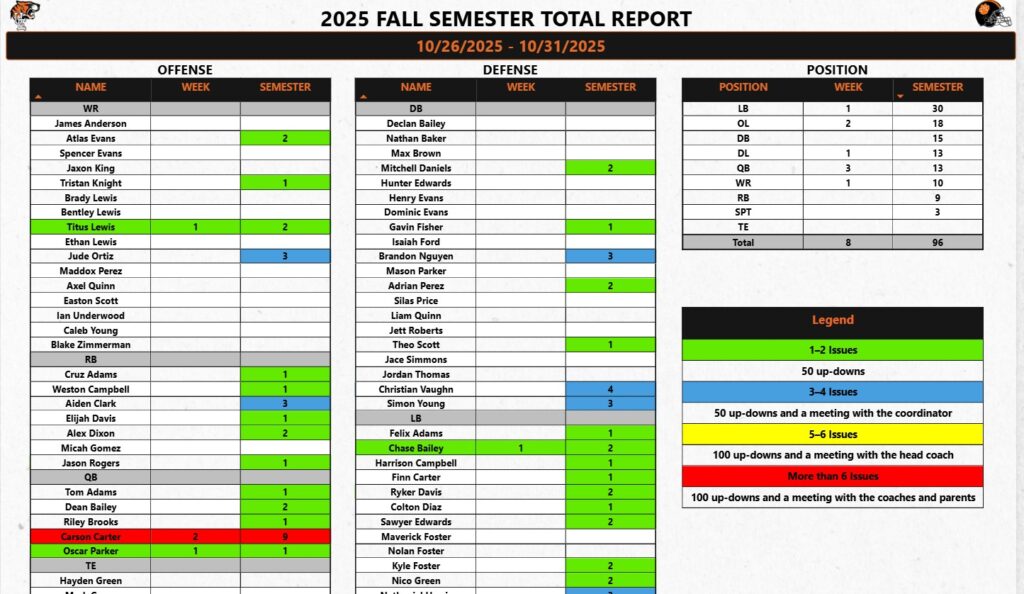
The Issue Tracking System maintains semester-level and seasonal totals automatically. Staff can select any timeframe—current semester, past semester, or a specific week within a season—and instantly see:
- Total issues per athlete
- Cumulative counts across weeks
- Color-coded classifications tied to program-defined thresholds
These thresholds can be aligned with your internal standards, including discipline tiers or response protocols, creating immediate clarity without interpretation.
Resetting views between semesters or seasons requires no cleanup. Historical data is preserved and always accessible.
Patterns Over Time
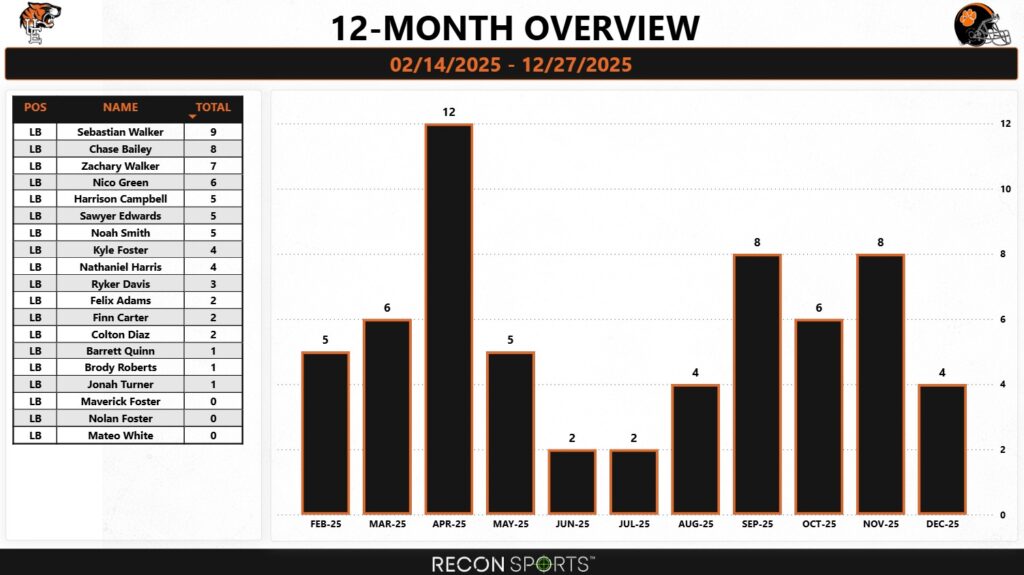
Because all issue data lives in one system, staff can zoom out beyond a single season.
The system supports 12-month and multi-year views, allowing staff to identify:
- Players with recurring patterns
- When issues tend to cluster
- Periods of stability vs volatility
This context is critical for understanding behavior, development, and intervention timing.
Correlating Issues to Performance and Outcomes
One of the most powerful aspects of the Issue Tracking System is the ability to correlate issues with other key metrics across the program, instead of viewing them in isolation.
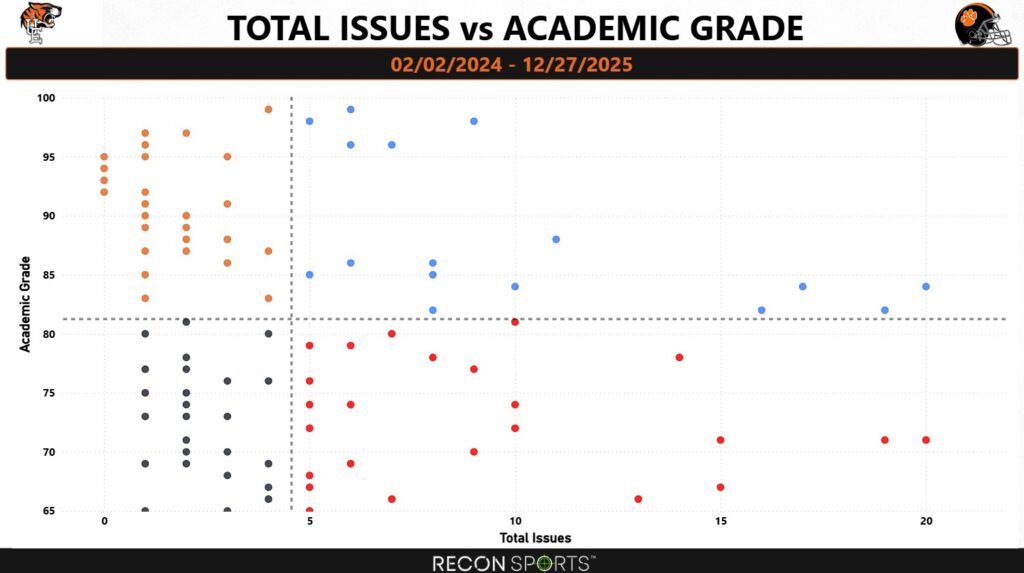
Because issues are structured and centralized, staff can directly compare issue totals against academic performance, allowing clear visibility into patterns such as:
- Athletes with high issue counts and low academic grades
- Athletes with low issue counts and high academic grades
- Outliers who may require a different type of support or conversation
This immediately shifts discussions from assumptions to evidence. Instead of guessing why something feels off, staff can see how behavior, accountability, and outcomes are actually aligning—or misaligning—across the roster.
Distance From Home — Adding Context to Risk
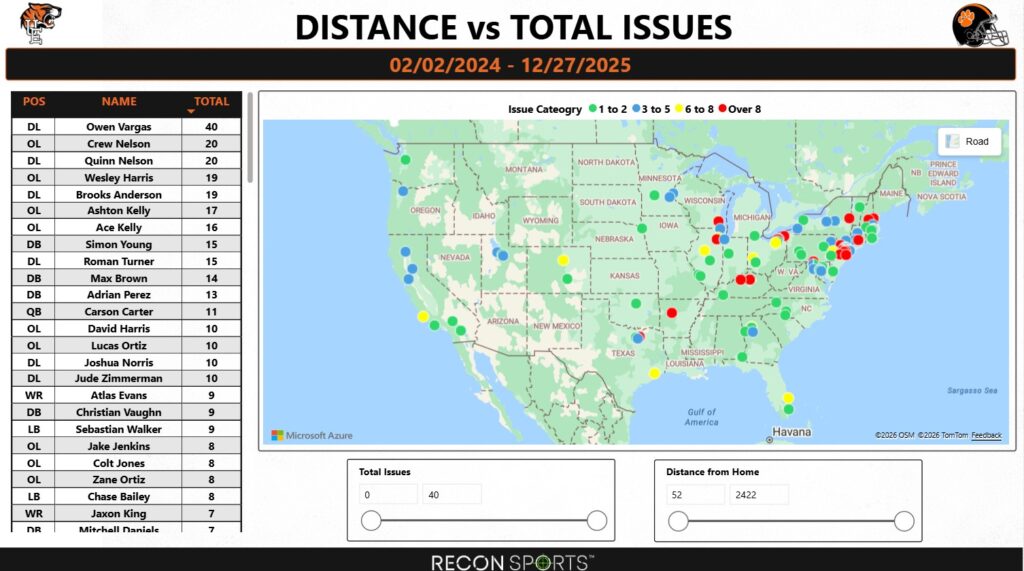
The system also enables analysis around distance from home, adding a layer of personal and geographic context that is often missing.
Staff can clearly see:
- Athletes with high issue counts who are close to home
- Athletes with high issue counts who are far from home
- Athletes who are far from home but consistently having low or no issues
This context changes the conversation. Distance may mean different things for different athletes, and the system allows staff to understand where additional support, structure, or intervention may be needed—without speculation.
By visualizing these relationships, the Issue Tracking System helps staff ask better questions earlier and respond with intent instead of reaction.
Why It Matters
Configurable to Your Program
Nothing in the Issue Tracking System is hard-coded.
Programs can define:
- What qualifies as an issue
- How issues are categorized
- Color codes and thresholds
- Reporting structures by position, class, or department
The system reflects your language, your standards, and your expectations—not a generic template.
Why It Matters
Issue tracking should reduce friction, not create it.
By eliminating spreadsheets, manual compilation, and fragmented history, the Issue Tracking System allows staff to spend less time managing information and more time communicating, supporting, and leading.
One form.
One system.
Complete visibility from daily operations to long-term trends.
Act with clarity.
See this solution in action: The System That Helped Unlock a Second-Round Draft Pick – Recon Sports