
Overview
Strength and performance metrics have always been part of high-level football. But data without context doesn’t move development forward. One program recognized that while they were collecting the right numbers, they didn’t have the right language to communicate what those numbers meant. Players and coaches needed clarity. Not just numbers—but benchmarks, comparisons, and context.
Problem
The strength staff was tracking everything. Daily reps. Weekly improvements. Quarterly testing numbers. But none of it answered the questions that mattered most: Where does this athlete stand? What do these numbers actually mean? Are they progressing toward the right standard?
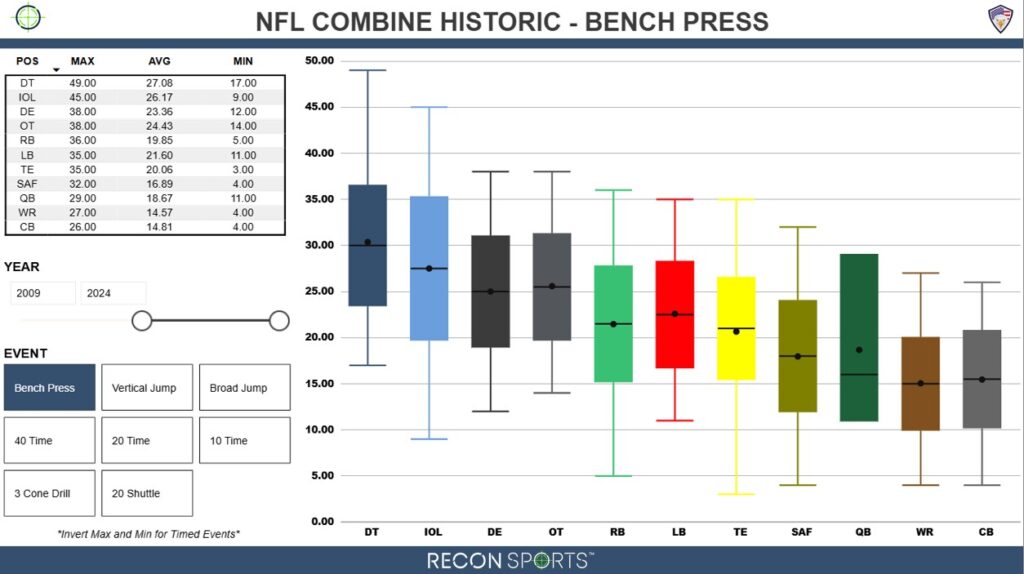
The challenge wasn’t effort. It was translation. Spreadsheets full of raw metrics weren’t resonating with athletes or coaching staff. Even when NFL Combine data was available, it was too broad and too disconnected. Coaches wanted to know how a player measured up to someone they had coached before. Players wanted to see how they compared to someone who had started at their position. Everyone wanted relevance, not just results.
Solution
Recon Sports delivered a system that gave context to performance. By integrating all internal strength data with a flexible set of benchmarks, staff could now compare athletes not just to external standards, but to anything meaningful inside the program. That included past players, positional expectations, team records, historical rosters, and yes, even verified NFL Combine data when appropriate.
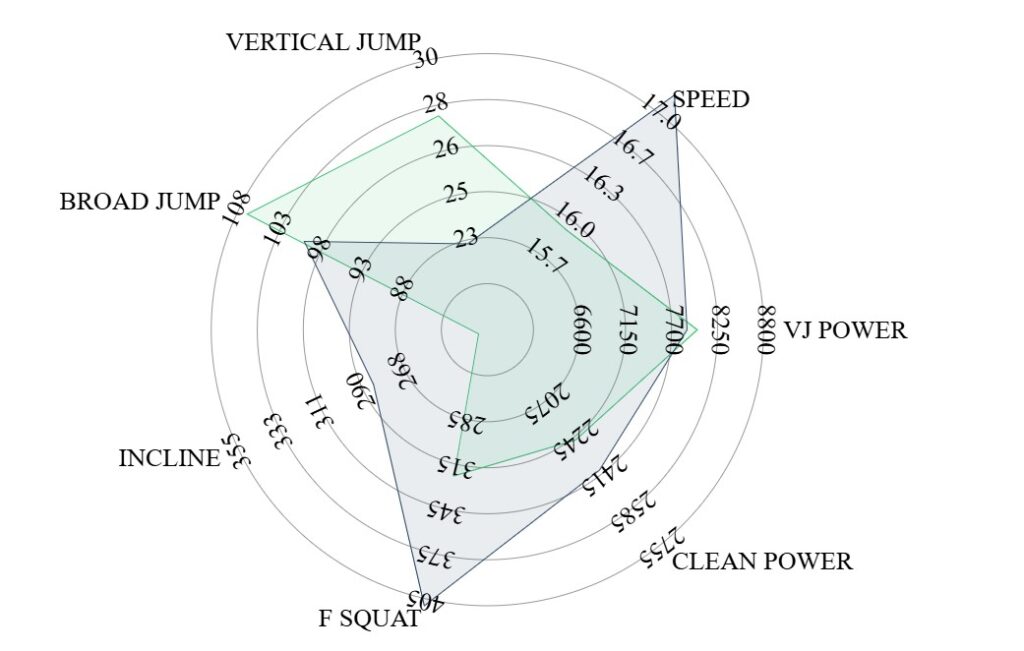
This created a living library of comparables. Now when a coach asked about an athlete’s progress, the answer wasn’t just a number. It was a reference. “Here’s where he stands compared to our all-time record at this position.” “Here’s how he stacks up to the last three starters who came through this room.” “Here’s how he measures against the standard we’ve set for this phase of development.”

Advantage
That shift changed everything. Strength staff could now speak directly to what players and coaches cared about most. Athletes saw their progress in ways that felt personal and real. Coaches gained trust in what was happening in the weight room because the data was organized, visualized, and tied to standards that meant something to them.
The value of the weight room increased overnight. Strength coaches weren’t just reporting maxes. They were telling the full story of where a player was, where he came from, and where he needed to go. That level of insight made development conversations stronger and more aligned across the entire staff.
What’s Possible Now
With Recon, every performance metric lives within a larger framework of context. Staff can instantly compare current athletes to any relevant benchmark—from program records to positional standards to past rosters and NFL data. Reports are easier to build. Conversations are easier to have. Everyone in the program is working from the same picture.
Before Recon, there was no clear way to connect training data to real development outcomes. After Recon, staff have a platform that makes performance meaningful—internally, positionally, historically, and personally.