
Overview
In high-performance football programs, data is everywhere—from the football field, weight room, and class room. But too often, this data is spread across disconnected systems, requiring coaches and staff to hunt through multiple logins just to answer one question about a player. The result is wasted time, missed context, and underutilized insights.
To solve this, one program turned to Recon Sports to build a dynamic, all-in-one Player Profile system. These profiles bring together key data points from every department onto a single, unified page. Whether it’s a strength coach checking recovery trends or a position coach reviewing practice performance, the right data is now available instantly, curated to the needs of the person viewing it.

Problem
Every department collects and manages data differently. The strength staff tracks lifts and workloads. The sports science team monitors sleep, hydration, and movement. Academics has class schedules and tutor reports. Player development tracks engagement and goals. But all of that lives in separate platforms, spreadsheets, or email threads. Coaches waste time switching between systems or, worse, never access the data at all because it’s too buried.
When a staff member gets asked a question about a player—”How’s he recovering? What’s his class attendance like? Is he trending up or down?” — they shouldn’t have to dig through five platforms. But that’s the reality without a unified system. It slows down decision-making, creates silos, and limits a program’s ability to act quickly and effectively.
Solution
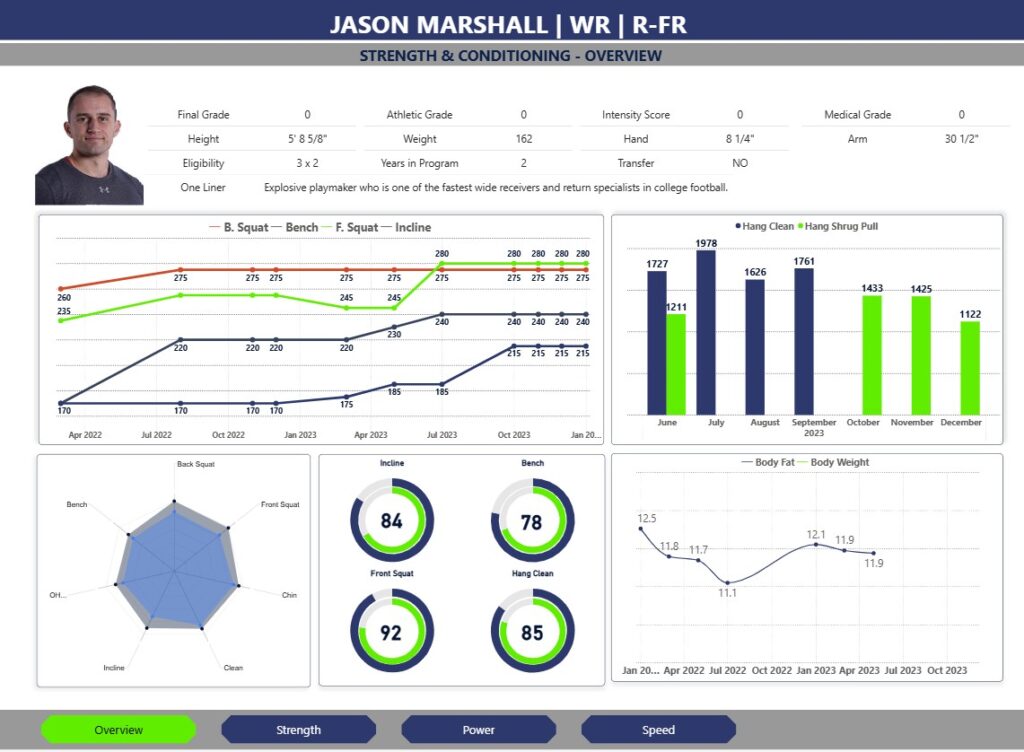
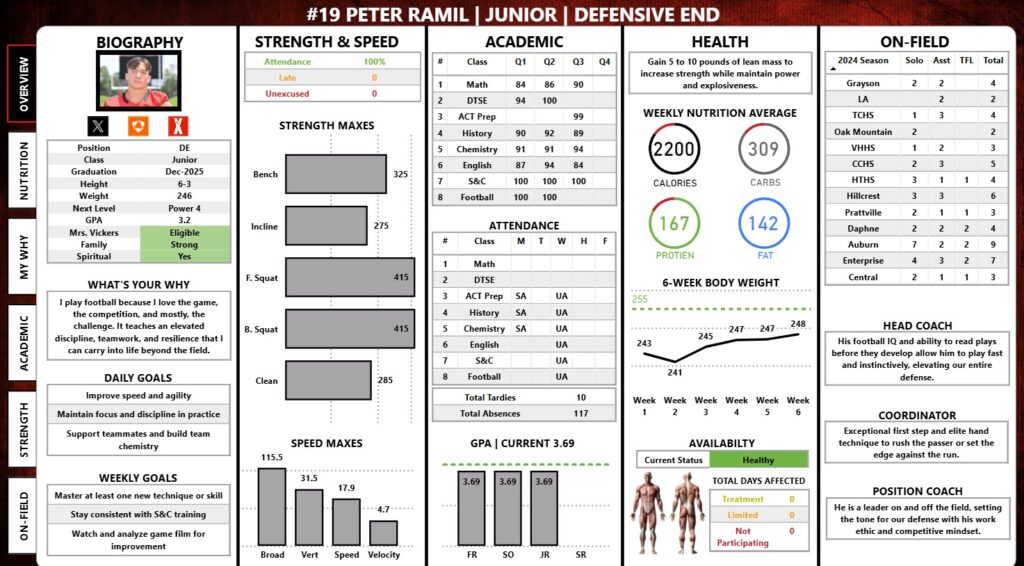
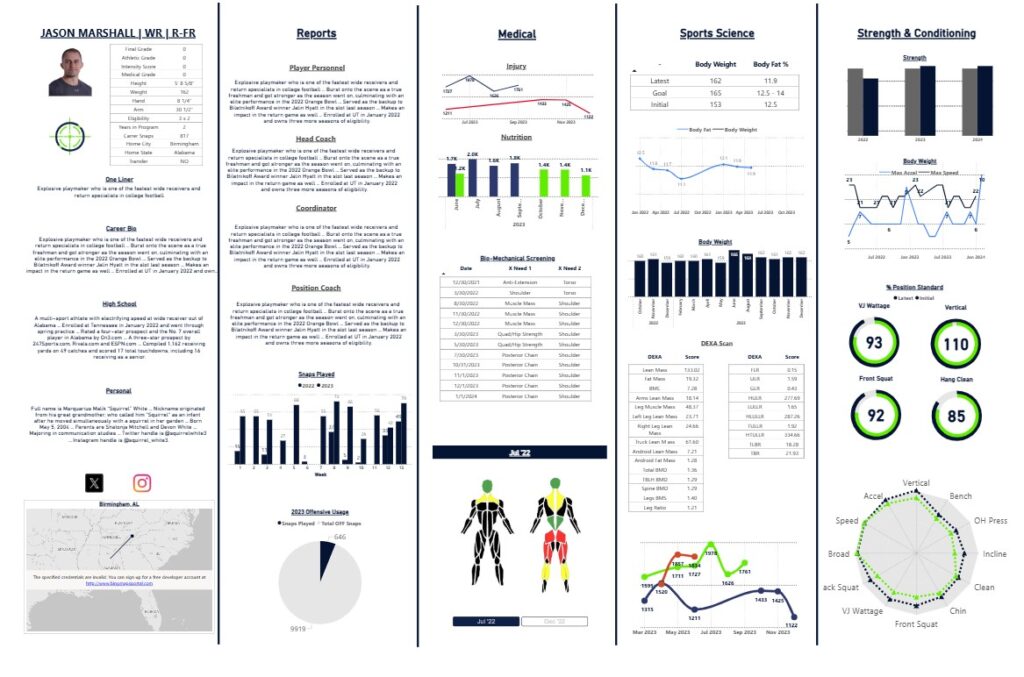
Recon Sports built fully customized Player Profiles for every athlete in the program. These profiles are live dashboards, automatically refreshed every 30 minutes, and accessible from a coach’s phone, tablet, or desktop. More importantly, they’re not generic. Each profile is curated to show the exact metrics that matter to the viewer.
A strength coach might see load metrics, wellness check-ins, and sleep scores. A position coach might see attendance, game grades, and behavioral notes. A player development director might see distance from home, engagement trends, and personal goals. Every metric is live, visualized clearly, and formatted to answer key questions fast.
There is no one-size-fits-all. Every director or coach can get their version of a player profile, built to their exact specifications, so they can answer any question in under 90 seconds.
Advantage
The impact of having Player Profiles built this way is immediate across the organization. Staff no longer waste time digging for answers. Instead, they’re equipped to act—quickly and confidently—with context that drives better decisions.
Position coaches use them in film review to see how physical performance matches up with film study habits. Strength coaches use them in real time to personalize training loads based on sleep and recovery trends. Player development directors use them to track behavioral patterns, academic alerts, and mental health check-ins. And when a head coach has a question about a player, no one scrambles—because the answer is already in their pocket.
These profiles don’t just consolidate data. They multiply the value of every data point by making it accessible, understandable, and actionable. What used to take 10 clicks, 3 emails, or a hallway conversation now takes 30 seconds and a tap.
What’s Now Possible
With dynamic, role-specific player profiles, every coach and director can operate at maximum clarity. When someone asks, “How’s he doing?” the answer is already on the screen. From high-level trends to specific red flags, the data is surfaced instantly and in context. It doesn’t just save time. It makes every conversation more precise and every action more intentional.
This is what happens when you unify data across the program—you get answers, alignment, and accountability. All in under 90 seconds.